Home › Blog › Marketing digital
Marketing digitalGoogle Ads or Meta Ads: which one suits your business?
Differences between Google Ads and Meta Ads (Facebook and Instagram), when each one is convenient and what to have ready before investing in digital advertising.
If you're thinking of investing in digital advertising, you've probably asked yourself this question: Should I put my money into Google Ads or Meta Ads (Facebook and Instagram)? The short answer is that they work differently and serve different purposes in the customer journey. Choosing wisely from the start avoids the most common frustration: spending on ads and not seeing sales.
In this guide, we explain, without technical jargon, how they differ, when each is convenient, and what you need to have ready before investing a single peso.
The fundamental difference: searching vs. discovering
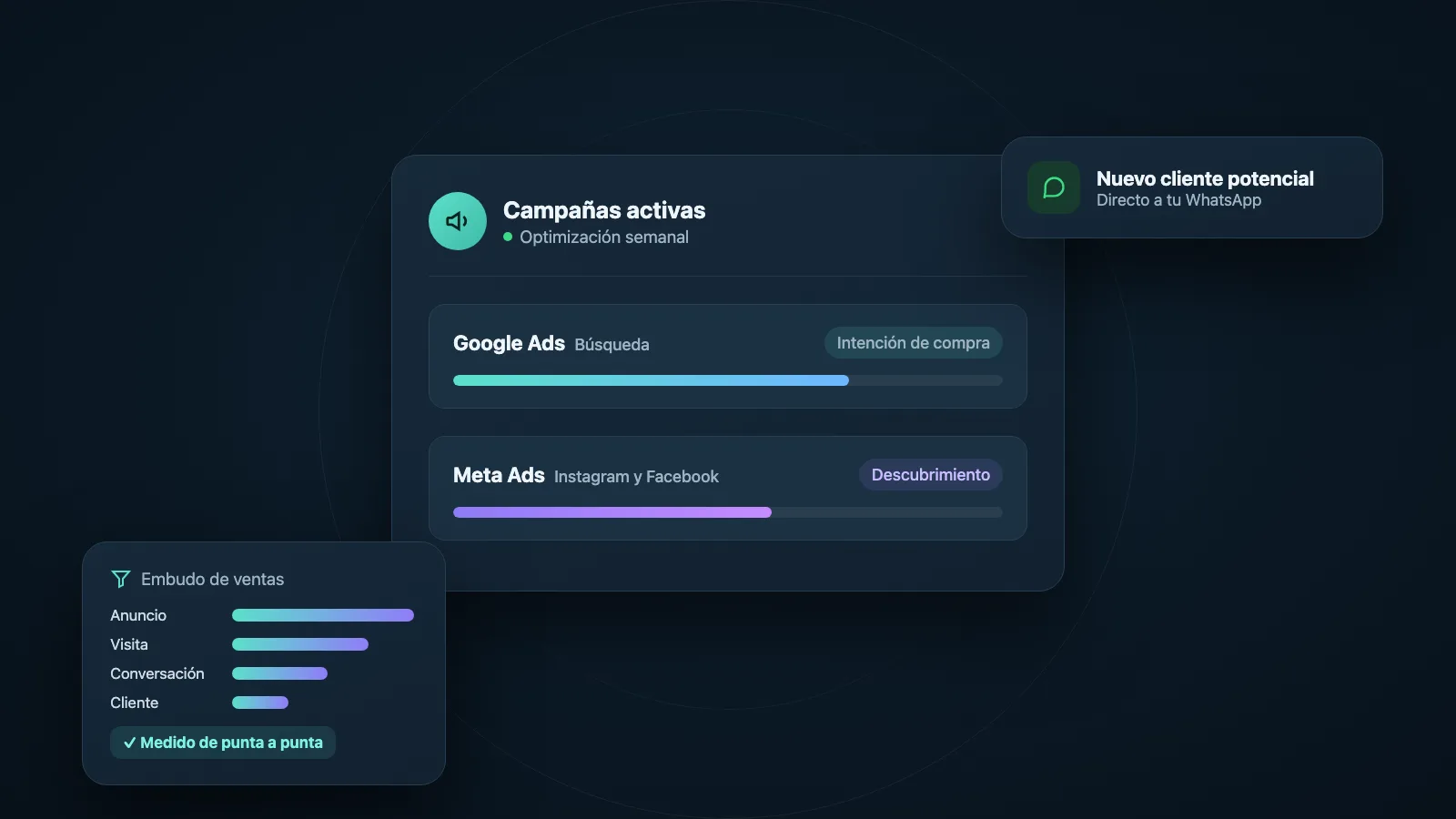
Google Ads shows you when someone is already searching for what you sell. If a person types "labor lawyer in Bogotá" or "wholesale footwear," they already have a need and are comparing options. Your ad appears at that exact moment.
Meta Ads (Facebook and Instagram) show you people who are not looking for you, but who, due to their interests, location, or behavior, might need what you offer. It's discovery advertising: you spark interest in someone who didn't know they needed you.
That's why they don't compete with each other. Google captures existing demand; Meta creates new demand.
When Google Ads is convenient
Google Ads is usually the best first option when:
- People are already searching for your product or service on Google: plumbing, dentistry, courses, spare parts, legal services, software, etc.
- You sell something that is bought out of necessity, not on impulse.
- Your customer compares options before deciding and you want to be among the options they review.
- You serve a specific area and want to appear when people search nearby.
Search campaigns are based on keywords. The fine-tuning lies in choosing the keywords that bring buyers (and not just curious people) and excluding those that waste budget without making sense.
When Meta Ads is convenient
Facebook and Instagram usually work better when:
- Your product is visual: fashion, decoration, food, beauty, tourism, real estate.
- It's something new that people don't know exists or aren't searching for by name.
- You want people to message you on WhatsApp: messaging campaigns lead the person directly to a conversation with you.
- You need to reach a very defined audience by age, city, interests, or behavior.
- You want to re-impact someone who has already visited your website or interacted with your social media (remarketing).
Quick comparison
Google Ads
- Customer moment: already searching.
- Type of demand: captures existing demand.
- Strong format: text in the search engine and video on YouTube.
- Ideal for: services bought out of necessity and customers who compare.
- Most important: choosing the right keywords.
Meta Ads
- Customer moment: not yet searching.
- Type of demand: creates new demand.
- Strong format: images, videos, and stories.
- Ideal for: visual products, new products, and WhatsApp conversations.
- Most important: choosing the right audience and creative.
What if I use both?
For many businesses, the best strategy is to combine them: Meta to get known and Google to be present when people are already searching for you. But if the budget is limited, it's better to start with one channel and do it well than to spread little money across many channels and not learn from any of them.
A practical rule: start with the channel where your customer is closest to buying. When that channel works and is measured, add the other.
What you need to have ready before advertising
This is where most of the money is lost in advertising, and it has nothing to do with the ads:
- Conversion measurement: install Google Analytics 4, the Google tag, and the Meta pixel, and define what counts as a result (a form, a WhatsApp message, a call). Without this, you won't know which ad brought each customer.
- A clear destination: a page or a WhatsApp where the person quickly understands what you offer and what to do. Sending traffic to a confusing page is paying for visits that leave.
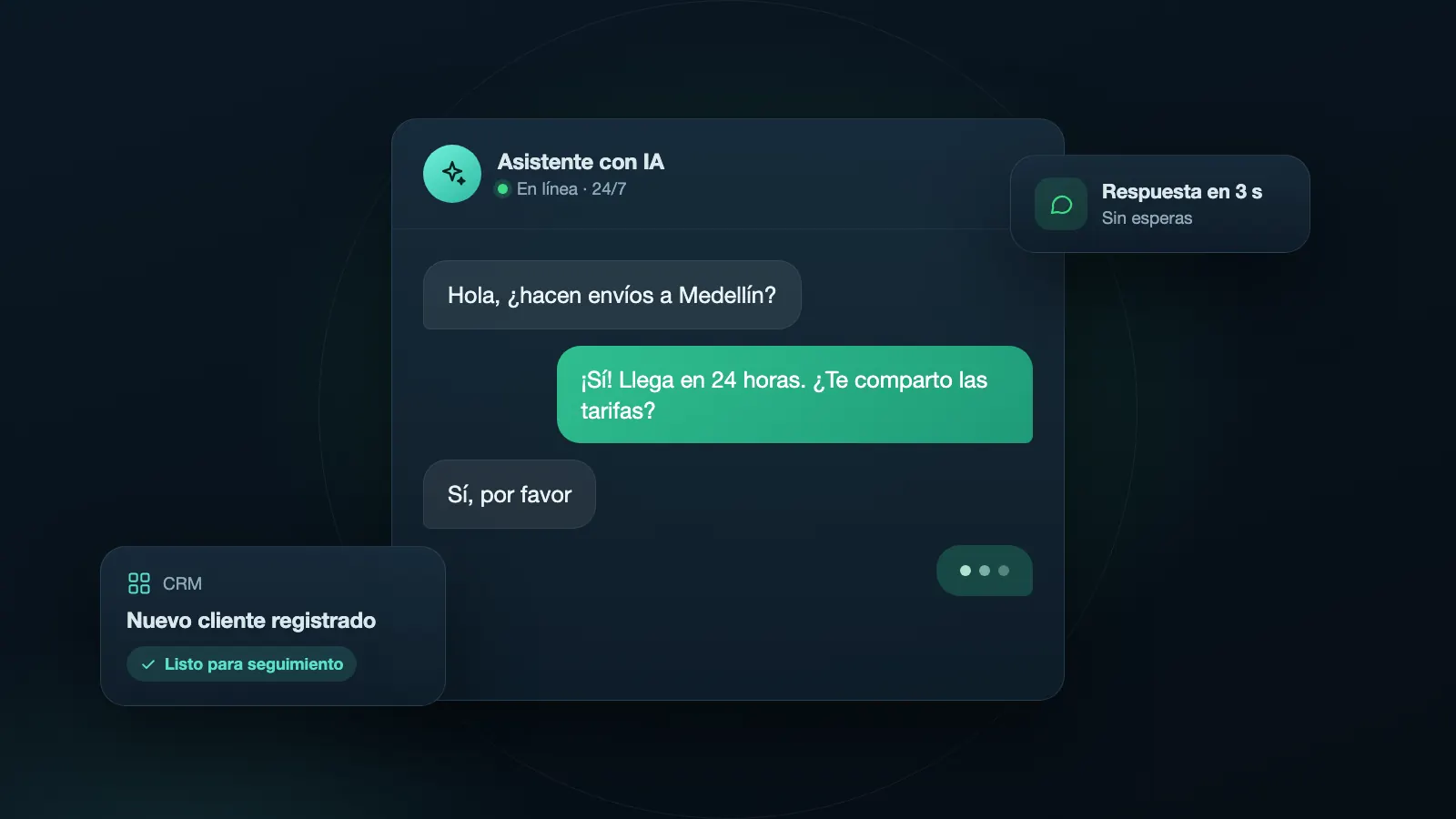
- Fast response: if someone writes to you from an ad and you respond the next day, they've probably already bought from someone else. Define who responds and how quickly, or rely on a WhatsApp assistant with AI.
- Follow-up: not everyone buys on the first message. Register each interested person in a CRM and follow up with reminders.
- A budget to learn: the first few weeks are for the platforms to find your audience. Define how much you can invest without pressuring immediate results.
Common mistakes that cost money
- "Boosting" posts without a goal: Instagram's promotion button is convenient, but it's rarely the most efficient way to get customers.
- Measuring "likes" instead of sales: reach doesn't pay the bills. Measure conversations, requests, and customers.
- Changing everything every two days: campaigns need data to optimize.
- Not checking which searches your ad appears in on Google: you might be paying for searches that have nothing to do with what you sell.
- Forgetting what happens after the click: advertising brings interested people; sales depend on how you attend to them.
Frequently asked questions
How much should I invest? It depends on your sector, city, how much a sale is worth to you, and your objective. What's important is defining a test budget, measuring well, and adjusting with real data.
Do I pay the budget to the agency? It's recommended that the ad spend is paid directly to Google or Meta with your company's card, and that the advertising accounts are in your name. This way, you always know how much goes to advertising and how much to management.
Can I do it myself? Yes, both platforms allow you to create campaigns on your own. The difference with professional management lies in strategy, measurement, and constant optimization.
In summary
Google Ads is ideal when your customer is already searching for you; Meta Ads, when you need to be discovered or want WhatsApp conversations. Before investing, have measurement, a clear destination, and a process for responding and following up ready: that's where most sales are won or lost.
If you want us to review your case, this month we're offering a free marketing and sales consultation with limited spots: we review your advertising, sales process, and WhatsApp, and you take away an action plan. You can also learn about our Google Ads and Meta Ads management service.